By Mark McManus
Head of VisNet Monitoring, EA Technology
When we talk to DNOs, the conversation keeps coming back to the same issue: the most complex challenges on the network are increasingly happening at the grid edge, yet that’s where visibility has traditionally been weakest.
Overhead LV networks are a perfect example. They are critical to keeping customers connected, but they were designed for a very different energy system, one with predictable demand and one-way power flows. Today, with EVs, heat pumps and distributed generation all connected at LV, that assumption no longer holds.
That’s the problem we set out to address with VisNet View.
When Capacity Becomes a Guessing Game
Capacity on overhead LV networks used to be something you assessed periodically. Now, it’s something that changes dynamically.
What we’re seeing is that localised constraints can develop quickly, driven by customer behaviour and bi-directional flows that simply weren’t visible before. Too often, capacity issues only become apparent once customers are already affected, or when reinforcement becomes unavoidable.
The VisNet View teamed with the VisNet Capacity App measures capacity dynamically, helping DNOs understand how their overhead LV networks are actually being used. That visibility allows teams to move away from assumptions and worst-case planning, and instead make informed decisions based on what’s really happening, both today and in the future. In fact, VisNet can help DNOs unlock up to an additional 22% capacity on feeders.
Faults Rarely Start with a Failure
One of the biggest lessons from working with networks is that most faults don’t come out of nowhere.
They start as small changes: gradual asset movement, increasing stress, or deterioration that goes unnoticed because there’s no clear signal to act on. By the time a fault occurs, the opportunity to intervene early has already passed.
VisNet Reliability Apps running on the VisNet View are designed to surface those pre-fault conditions on overhead lines. By improving visibility of emerging issues at the grid-edge, DNOs can take earlier, more targeted action, reducing the likelihood of faults, improving safety, and making maintenance investment work harder.
Real-Time Insight When the Network is Under Pressure
Of course, when faults do happen, particularly during storms, the challenge shifts from prediction to response.
Overhead LV faults can be time consuming to locate and diagnose quickly, especially when multiple incidents are happening at once. That uncertainty can slow restoration and extend customer interruptions.
With VisNet View and the Reliability Apps, real-time grid-edge intelligence helps operators understand what’s happening on the network as events unfold. That clarity supports faster decision-making, more efficient deployment of resources, and ultimately a better experience for customers when it matters most.
Resilience Starts with Visibility
Storm resilience is no longer just about how quickly you can respond, it’s about how well you understand where the network is vulnerable before severe weather hits.
Overhead assets are inherently exposed, and as weather patterns become more extreme, that exposure increases. VisNet View helps shine a light on those vulnerabilities, supporting a more proactive approach to resilience and helping reduce the risk of unplanned outages.
Built for the Reality of UK Networks
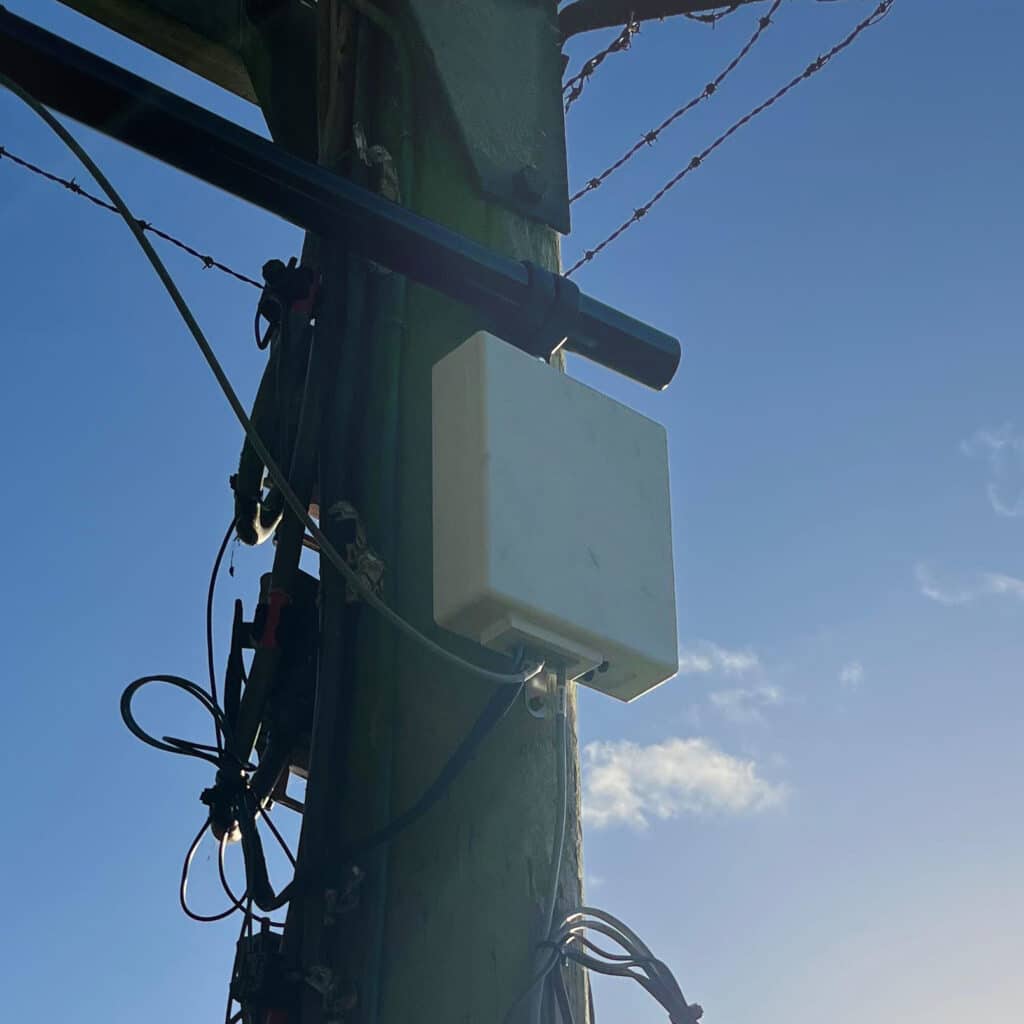
From the outset, we designed VisNet View to work in the real world.
It’s simple to install on any pole, secure by design with end-to-end encryption, and designed and manufactured here in the UK. That matters, because grid-edge intelligence only delivers value if it can be deployed safely, securely and at scale across the network.
Building on a Proven Foundation
Building on the success of the VisNet Hub, which now is active in over 25,000 UK ground-mounted substations, we’re very excited to launch VisNet View and extend that intelligence to overhead LV lines.
It’s an asset that provides owners and operators of LV networks with the insight they need to support well-informed operational decisions, detect future capacity challenges and plan maintenance investment more effectively.
As the overhead network becomes increasingly complicated with the addition of bi-directional energy flow, visibility is key.
Grid-edge intelligence is ultimately about helping DNOs keep Britain’s lights on. With VisNet View, we’re helping them deliver a better service to their customers, while supporting the UK’s decarbonisation goals.